
Cassava Starch, Flour And Garri Production In Nigeria, The Feasibility Report.{Multi Purpose Cassava Processing Plant}
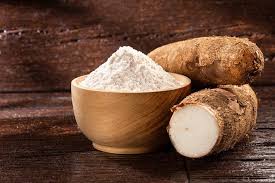
Cassava (Manihot esculenta) is one of the most important root crops in Nigeria, serving as both a staple food and a major source of income for millions of smallholder farmers and rural processors. Its versatility and resilience make it a critical component of food security, rural livelihoods, and the agro-industrial sector in the country. Beyond its role as a staple for rural and urban households, cassava is increasingly recognized for its industrial potential in producing starch, flour, ethanol, and other value-added products.
Nigeria is currently the world’s largest producer of cassava, with an annual production estimated at over 49 million metric tonnes as of 2025. Despite contributing approximately 5% of Nigeria’s agricultural GDP, the bulk of cassava is still consumed as food in its traditional forms, while industrial processing and utilization remain underdeveloped. This represents a significant opportunity for investment in mechanized processing and value addition.
Since Nigeria’s return to civil rule in 1999, the country has experienced a gradual growth of the middle class, alongside rising urbanization and increasing social and health awareness. These developments have contributed to higher demand for hygienically processed and quality-controlled foods, creating a strong market for industrially produced cassava products such as cassava starch, high-quality cassava flour (HQCF), and Garri.
This growing demand is further fueled by Nigeria’s rapidly expanding population, currently estimated at over 216 million people (2025), and a sustained rural-to-urban migration trend. Cassava-based products such as starch, flour, and Garri are increasingly seen as essential staples and industrial raw materials, driving the need for large-scale processing facilities.
Market Applications of Cassava Products
-
Cassava Starch: Cassava starch is a fine, whitish powder extracted from the cassava root. It is widely used in various industrial applications due to its excellent binding, thickening, and gelling properties. Key industries that utilize cassava starch include:
-
Textiles: For sizing and finishing fabrics
-
Oil Drilling: As a viscosifier in drilling fluids
-
Food and Beverages: As a thickener, stabilizer, and filler
-
Pharmaceuticals: As a binder in pills and tablets
-
Paper and Adhesives: As a raw material in paper sizing and glue production
-
-
High-Quality Cassava Flour (HQCF): HQCF is a fine, dried powder derived from peeled, washed, and milled cassava roots. It has emerged as a critical substitute for wheat flour in bakery and confectionery products, particularly in bread, biscuits, and pastries. Government policies promoting cassava-wheat composite flour aim to reduce Nigeria’s dependence on imported wheat, conserve foreign exchange, and encourage local production.
-
Garri: Garri is a traditional fermented and roasted cassava product that is widely consumed across Nigeria. Its popularity transcends socio-economic, religious, and ethnic boundaries, making it a staple in households across the country. Garri consumption is estimated to be among the highest for any processed cassava product, with over 60% of harvested cassava tubers in Nigeria traditionally used for Garri production. Its versatility as a convenient, storable, and energy-rich food makes it central to both rural and urban diets.
Business Overview
The proposed project seeks to establish a multi-purpose cassava processing plant in Nigeria, designed to process fresh cassava tubers into cassava starch, HQCF, and Garri. The operation would involve:
-
Sourcing and transporting high-quality cassava tubers from local farms
-
Mechanized processing to produce value-added products
-
Packaging and distribution for sale in the domestic market
By integrating these production lines, the plant aims to meet growing domestic demand while creating employment opportunities, reducing post-harvest losses, and contributing to Nigeria’s agricultural industrialization agenda.
Market Demand and Trends
-
Cassava Starch: Annual demand in Nigeria is estimated at over 350,000 tonnes, primarily driven by the textile, pharmaceutical, food, and adhesive industries. Domestic production currently lags behind demand, creating a supply gap that presents opportunities for large-scale processing.
-
HQCF: Increasingly used in bakery and confectionery products as part of government-driven cassava-wheat composite policies. Demand is projected to rise in line with urbanization, population growth, and local manufacturing expansion.
-
Garri: Remains a staple food, with consumption cutting across demographic and socio-economic lines. The traditional processing methods are still predominant, but mechanized Garri production is gaining traction in urban markets due to better hygiene and longer shelf life.
Cassava represents one of the most strategic agricultural commodities in Nigeria, with the potential to significantly enhance rural incomes, industrial growth, and national food security. Mechanized processing into starch, HQCF, and Garri not only addresses supply gaps but also supports the federal government’s economic objectives, including import substitution, industrialization, and foreign exchange conservation.
The combination of abundant raw materials, growing domestic demand, and untapped industrial potential makes cassava processing a highly attractive investment opportunity in Nigeria.
Custom Research Request
Still haven't found what you're looking for?
Speak to our Custom Research Team.
Table of Contents
Table of Content EXECUTIVE SUMMARY Business Overview 1.1 Description of the Business 1.2 Vision and Mission Statement 1.3 Business Objective 1.4 Value Proposition 1.5 Critical Success Factor of the Business 1.6 Current Status of Business 1.7 Description of the Business Industry 1.8 Contribution to Local and National Economy Marketing Plan 2.1 Description of product 2.2 Product Packaging and delivery 2.3 The Opportunity 2.4 Pricing Strategy 2.5 Target Market 2.6 Distribution and Delivery Strategy 2.7 Promotional Strategy 2.8 Competition Production Plan 3.1 Description of the Location 3.2 Raw Materials 3.3 Production Equipment 3.4 Production Process 3.5 Production Cost 3.6 Stock Control Process 3.7 Pre-Operating activities and expenses 3.7.1 Operating Activities and Expenses 3.8 Milestones Organizational and Management Plan 4.1 Ownership of the business 4.2 Profile of the promoters 4.3 Key Management Staff 4.3.2 Management Support Units 4.4 Details of salary schedule Financial Plan 5.1 Financial Assumption 5.2 Start up Capital Estimation 5.3 Source of Capital 5.4 Security of Loan 5.5 Loan Repayment Plan 5.6 Profit and Loss Analysis 5.7 Cashflow Analysis 5.8 Viability Analysis Business Risk and mitigation factor 6.1 Business Risks 6.2 SWOT Analysis
Project Specification:
Additional Info
Get this Report
Direct bank transfer
To order the report, Please do pay the sum of ₦350,000 into
Account Name : Foraminifera Market Research Ltd
Account Number : 274 20 569 37
Account Name : Foraminifera Market Research Ltd
Account Number : 101 76 603 95
Account Name : Foraminifera Ventures
Account Number : 011 66 066 32
Make your payment directly into our bank account. Please use your Order ID as the payment reference. Your order will not be shipped until the funds have cleared in our account.
Instructions
After payment call us on 01 -29 52 413 / 08033782777 or email us at foraminiferamarketresearch@yahoo.com with the payment details. After payment confirmation, the soft copy of the report would be sent to you within 24 hours.