
Cassava Starch and Garri Production in Nigeria; The Feasibility Report.
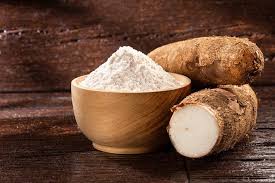
Cassava (Manihot esculenta) is one of Nigeria’s most important root crops, providing both a staple food and a major source of income for millions of rural farmers and processors. Its adaptability to diverse soils and climates, coupled with high yield potential, makes cassava a key driver of food security and rural livelihoods across the country. Nigeria currently leads the world in cassava production, producing an estimated 49 million metric tonnes annually (2025), with output concentrated in states like Kano, Benue, Edo, Cross River, Oyo, Ogun, Delta, and Rivers.
Cassava contributes about 5% of Nigeria’s agricultural GDP for domestic consumption, yet its industrial processing remains underdeveloped, representing a major opportunity for value addition and economic growth.
Cassava Starch
Cassava starch is a white, powdery substance extracted from cassava tubers, typically through wet milling. Fresh mature tubers contain 15–25% starch, which can be efficiently processed into industrial-grade starch. Cassava starch is widely valued for its functional properties, including thickening, gelling, and binding.
Industrial Uses of Cassava Starch:
-
Textile Industry: Sizing, finishing, and printing fabrics
-
Food and Beverage: Thickener, stabilizer, filler in sauces, soups, and processed foods
-
Pharmaceuticals: Binder in tablets and capsules
-
Paper and Packaging: Adhesives, paper sizing
-
Oil Drilling and Chemicals: Viscosifier for drilling muds and chemical formulations
The domestic demand for cassava starch is estimated at 350,000 tonnes per year, while the current supply is around 300,000 tonnes, leaving a notable supply gap. The federal government’s policy on cassava starch substitution for corn starch continues to stimulate growth in this sector.
Garri
Garri is a creamy-white granular flour made from fermented and gelatinized cassava tubers. It is one of Nigeria’s most widely consumed staple foods and crosses all socio-economic, religious, and ethnic boundaries. Garri is most commonly eaten as Eba, prepared by stirring Garri into hot water until it forms a dough-like consistency.
Key Features of Garri:
-
Rich in carbohydrates and energy
-
Easy to store and transport
-
Consumed in almost every household across Nigeria
-
Affordable across all income levels
Market Demand for Garri:
The national demand for Garri is estimated at 1,000,000 tonnes per year, whereas supply is only about 250,000 tonnes, leaving a significant supply gap. Increasing urbanization, population growth (Nigeria’s population is now estimated at over 216 million), and the diversion of cassava tubers to starch and flour production have intensified the market opportunity for mechanized Garri production. The Garri market in Nigeria is currently valued at over ₦8 billion annually, with strong growth potential.
High-Quality Cassava Flour (HQCF)
High-Quality Cassava Flour is obtained by peeling, washing, drying, and milling fresh cassava tubers. HQCF serves as a wheat flour substitute in bread, biscuits, and other baked goods. Government programs promoting cassava-wheat composite flour are aimed at reducing Nigeria’s reliance on imported wheat and encouraging local agro-industrial development.
Mechanized Cassava Processing Plant
Establishing a multi-purpose cassava processing plant in Nigeria can produce cassava starch, Garri, and HQCF from fresh cassava tubers. Such a plant would involve:
Proposed Farm and Plant Setup:
-
Land Requirement: 1,700 hectares in Edo State
-
1,530 hectares for cassava cultivation
-
170 hectares for processing plant, storage, and civil works
-
-
Cassava Variety: Improved stems (TME 419)
-
Expected Yield: 20 tonnes per hectare
Plant Configuration and Equipment:
-
Cassava Starch Plant
-
Garri Production Unit
-
HQCF Milling Unit
-
Supporting infrastructure: generator, weighbridge, forklifts, water and waste management systems, storage tanks
-
Equipment: tractors, motorized sprayers, cassava harvesters, disc harrows, stump removers, delivery trucks
Production Capacity:
-
Cassava Starch: 20 tonnes/day at 80% capacity
-
Garri: 10 tonnes/day at 80% capacity
-
Operation: 10 hours/day, 300 days/year
Input/Output Ratios:
-
Cassava Tubers to Starch: 4:1
-
Cassava Tubers to Garri: 4:1
Market Drivers
The demand for cassava products in Nigeria is supported by:
-
Population Growth: Nigeria’s population is growing at 3.5% per year, increasing demand for food staples and industrial raw materials.
-
Urbanization: Rural-to-urban migration drives consumption of processed and packaged cassava products.
-
Government Policies: Initiatives promoting cassava flour in wheat products and substitution of corn starch with cassava starch encourage local processing.
-
Industrial Expansion: Food, beverage, textile, pharmaceutical, and chemical industries rely on cassava starch as a raw material.
-
Supply Gaps: Current production levels are insufficient to meet demand, offering strong opportunities for mechanized production.
Cassava represents a cornerstone of Nigeria’s agricultural and industrial strategy. With abundant raw material, high domestic demand, supportive government policies, and significant value addition potential, investing in cassava starch, Garri, and HQCF production offers lucrative economic returns.
The proposed mechanized plant not only addresses supply shortages but also promotes rural employment, strengthens food security, and contributes to Nigeria’s agro-industrial growth.
Custom Research Request
Still haven't found what you're looking for?
Speak to our Custom Research Team.
Table of Contents
EXECUTIVE SUMMARY 1.0 Business Overview 1.1 Description of the Business 1.2 Vision and Mission Statement 1.3 Value Proposition 1.4 Critical Success Factor of the Business 1.5 Current Status of Business 1.6 Description of the Business Industry 1.7 Contribution to Local and National Economy 2. Marketing Plan 2.1 Description of product 2.2 Product Packaging and delivery 2.3 The Opportunity 2.4 Pricing Strategy 2.5 Target Market 2.6 Distribution and Delivery Strategy 2.7 Promotional Strategy 2.8 Competition 3. Production Plan 3.1 Description of the Location 3.2 Raw Materials 3.3 Production Equipment 3.4 Production Process 3.5 Production Cost 3.6 Stock Control Process 3.7 Pre-Operating activities and expenses 3.7.1 Operating Activities and Expenses 3.8 Project Implementation Schedule 4.0 Organizational and Management Plan 4.1 Ownership of the business 4.2 Profile of the promoters 4.3 Key Management Staff 4.3.2 Management Support Units 4.4 Details of salary schedule 5. Financial Plan 5.1 Financial Assumption 5.2 Start - Up Capital Estimation 5.3 Source of Capital 5.4 Security of Loan 5.5 Loan Repayment Plan 6.0 Business Risk and mitigation factor 6.1 Business Risks 6.2 SWOT Analysis
Project Specification:
Additional Info
Get this Report
Direct bank transfer
To order the report, Please do pay the sum of ₦350,000 into
Account Name : Foraminifera Market Research Ltd
Account Number : 274 20 569 37
Account Name : Foraminifera Market Research Ltd
Account Number : 101 76 603 95
Account Name : Foraminifera Ventures
Account Number : 011 66 066 32
Make your payment directly into our bank account. Please use your Order ID as the payment reference. Your order will not be shipped until the funds have cleared in our account.
Instructions
After payment call us on 01 -29 52 413 / 08033782777 or email us at foraminiferamarketresearch@yahoo.com with the payment details. After payment confirmation, the soft copy of the report would be sent to you within 24 hours.