
Cassava Tuber Cultivation and Production of Cassava Starch in Nigeria; The Feasibility Report.
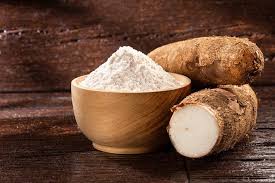
Cassava (Manihot esculenta) is the most important root crop in Nigeria, widely grown in both rural and urban households. Beyond being a staple food, cassava is a major source of income for smallholder farmers and processors in rural communities. Nigeria is the largest producer of cassava in the world, with an estimated annual output of 40 million tonnes, highlighting its strategic importance to food security and economic growth.
Cassava starch is a whitish, powdery substance extracted from the cassava tuber. It is a versatile industrial product widely used in food, pharmaceutical, pulp and paper, and textile industries. Cassava starch is known for its thickening, binding, and gelling properties, making it an essential ingredient in the production of sauces, soups, confectioneries, adhesives, syrups, and as a sizing agent in textile processing.
Starch can be classified into several types based on its source and industrial use:
-
Native Starch – The unmodified form extracted from raw materials such as cassava, corn, potato, and rice. It is commonly used in food, textile sizing, and paper industries.
-
Modified Starch – Chemically or physically altered starch with enhanced properties such as improved stability, gelling, or thickening for specialized industrial applications.
-
High-Quality Cassava Flour (HQCF) – A form of cassava starch used as a wheat flour substitute in bakery and confectionery products.
-
Industrial Starch – Used in non-food industries such as adhesives, textiles, pharmaceuticals, and biodegradable plastics.
The global starch market has been growing steadily due to increasing demand from food, beverage, pharmaceutical, and industrial applications. According to market estimates, the global starch market was valued at over $60 billion in 2025, with projections indicating a CAGR of 4-5% over the next five years. Asia-Pacific dominates the market, followed by North America and Europe, driven by industrial growth, rising consumption of convenience foods, and expansion in the pharmaceutical and biofuel sectors.
Nigeria’s cassava starch industry is underdeveloped despite the country being the world’s largest producer of cassava. Most cassava is processed into garri, fufu flour, and other food products, while its industrial potential remains largely untapped. The government has promoted the substitution of imported corn starch with locally-produced cassava starch to conserve foreign exchange and reduce import dependency.
The local demand for cassava starch is high, particularly in textile sizing, food and beverage production, adhesives, pharmaceuticals, and oil drilling. Annual national demand is estimated at 350,000 tonnes, while domestic supply is around 300,000 tonnes, leaving a supply gap that presents a significant business opportunity.
This report examines the financial viability of establishing a mechanized cassava farm and cassava starch production plant in Nigeria using cassava tubers as the primary raw material.
-
Farm Size and Location: 1,300 hectares in Edo State, with 1,200 hectares allocated for cassava cultivation and 100 hectares for the production facility and related civil works.
-
Crop Variety and Yield: Improved cassava stems (TME 419) with an estimated yield of 20 tons per hectare.
-
Proposed Plant and Equipment: Cassava starch plant, generator, wagon balance (weight bridge), transformer and electrical poles, weighing machine, wood pallets, AGO storage tank, forklift, delivery trucks, John Deere tractor, motorized knapsack sprayer, cassava harvesting and planting machines, disc harrows, and stump removers.
-
Production Capacity: 20 tons per day of cassava starch at 80% installed capacity, operating 10 hours per day for 300 days per year.
-
Input-Output Ratio: 4:1 (4 tons of cassava tubers yield 1 ton of cassava starch).
The establishment of a mechanized cassava farm and starch production plant in Nigeria presents a significant opportunity to tap into a growing industrial market, reduce import dependency, and generate sustainable revenue for investors. With the rising demand for cassava starch across food, industrial, and pharmaceutical sectors, this venture aligns with national policies on agricultural value addition and economic diversification.
Custom Research Request
Still haven't found what you're looking for?
Speak to our Custom Research Team.
Table of Contents
EXECUTIVE SUMMARY 1.0 Business Overview 1.1 Description of the Business 1.2 Vision and Mission Statement 1.3 Value Proposition 1.4 Critical Success Factor of the Business 1.5 Current Status of Business 1.6 Description of the Business Industry 1.7 Contribution to Local and National Economy 2.0 Agricultural Practice 2.1.0 Collection of stems 2.1.1 Planting 2.1.2 Manures and Fertilizers 2.1.3 Weeding 2.1.4 Climate / Irrigation 2.1.5 Harvesting and Yield 2.1.5.1 Herbicides 2.2 Factors of Production/ Cultivation 2.2.1 Soil Type 2.2.2 Diseases and Pests 3. Marketing Plan 3.1 Description of product 3.2 Product Packaging and delivery 3.3 The Opportunity 3.4 Pricing Strategy 3.5 Target Market 3.6 Distribution and Delivery Strategy 3.7 Promotional Strategy 3.8 Competition 4. Production Plan 4.1 Description of the Location 4.2 Raw Materials 4.3 Production Equipment 4.4 Production Process 4.5 Production Cost 4.6 Stock Control Process 4.7 Pre-Operating activities and expenses 4.7.1 Operating Activities and Expenses 4.8 Project Implementation Schedule 5.0 Organizational and Management Plan 5.1 Ownership of the business 5.2 Profile of the promoters 5.3 Key Management Staff 5.3.2 Management Support Units 5.4 Details of salary schedule 6. Financial Plan 6.1 Financial Assumption 6.2 Start - Up Capital Estimation 6.3 Source of Capital 6.4 Security of Loan 6.5 Loan Repayment Plan 6.6 Profit and Loss Analysis 6.7 Cash Flow Statement 6.8 Viability Analysis 7.0 Business Risk and mitigation factor 7.1 Business Risks 7.2 SWOT Analysis
Project Specification:
Additional Info
Get this Report
Direct bank transfer
To order the report, Please do pay the sum of ₦350,000 into
Account Name : Foraminifera Market Research Ltd
Account Number : 274 20 569 37
Account Name : Foraminifera Market Research Ltd
Account Number : 101 76 603 95
Account Name : Foraminifera Ventures
Account Number : 011 66 066 32
Make your payment directly into our bank account. Please use your Order ID as the payment reference. Your order will not be shipped until the funds have cleared in our account.
Instructions
After payment call us on 01 -29 52 413 / 08033782777 or email us at foraminiferamarketresearch@yahoo.com with the payment details. After payment confirmation, the soft copy of the report would be sent to you within 24 hours.