
Feasibility Report on Monazite Mining, Beneficiation and Export from Nigeria
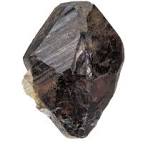
Monazite ore, a rare earth phosphate mineral containing valuable elements such as cerium, lanthanum, neodymium, and thorium, is increasingly being recognized as a critical resource in the global transition toward clean energy and advanced industrial technologies. As demand accelerates for rare earth elements (REEs) used in electric vehicles, wind turbines, electronics, and defense systems, countries with large but underutilized deposits—such as Nigeria—are attracting growing interest as alternative supply sources.
On the global stage, the monazite market is expanding steadily. Estimated at about $1.8 billion in 2025, it is projected to reach $3.4 billion by 2034, reflecting a compound annual growth rate (CAGR) of 7.3%. This growth is underpinned by the rapid shift toward renewable energy, increasing efforts to diversify global rare earth supply chains, and the rising demand for smaller, more efficient electronic devices.
Monazite sand continues to dominate the product landscape, accounting for approximately 52.4% of the market in 2025, largely due to its accessibility and relatively straightforward processing requirements. Geographically, the Asia-Pacific region leads with a 47.6% share of global revenue, driven by robust industrial demand and established processing capabilities.
Nigeria is well positioned to benefit from these favorable market dynamics, given its estimated monazite reserves of about 6 million tonnes. These deposits are spread across several states, including Plateau, Cross River, Kaduna, Kebbi, and Niger, where the mineral commonly occurs in alluvial and placer formations alongside other heavy minerals such as ilmenite, rutile, and zircon. Despite this significant resource base, development has remained limited due to inadequate exploration, weak infrastructure, and low investment in processing capacity.
At present, monazite extraction in Nigeria is largely carried out by artisanal and small-scale miners. These operations typically involve manual recovery of heavy mineral sands from riverbeds and near-surface deposits, followed by basic separation methods. While they provide income for local communities, they are generally inefficient and often environmentally unsustainable. In contrast, large-scale commercial mining would require mechanized techniques such as dredging, hydraulic mining, and dry mining with modern equipment—approaches that can significantly improve recovery efficiency and ensure reliable output for industrial and export markets.
A key determinant of value in the monazite industry is beneficiation. In its raw form, monazite has limited market value compared to refined rare earth oxides, which command significantly higher prices. The beneficiation process typically begins with gravity concentration of heavy minerals, followed by magnetic and electrostatic separation to isolate monazite. This is then subjected to chemical processing—commonly through acid or alkaline digestion—to extract rare earth elements. Advanced refining methods such as solvent extraction and ion exchange are subsequently used to separate individual REEs. However, Nigeria currently lacks sufficient domestic beneficiation infrastructure, resulting in the export of largely unprocessed or semi-processed material and, consequently, a loss of potential value.
The export of monazite from Nigeria is governed by several regulatory bodies, including the Federal Ministry of Solid Minerals Development, the Mining Cadastre Office, the Nigerian Export Promotion Council, and the Nigeria Customs Service. Operators are required to obtain mining licenses, secure export approvals, and comply with environmental regulations. Recent policy direction has increasingly emphasized local value addition, with the government encouraging in-country processing before export.
Despite its strong resource base, Nigeria’s monazite sector faces notable structural constraints. Chief among these is the absence of processing facilities, which limits participation in higher-value segments of the global rare earth market. Additionally, the presence of trace radioactive elements such as thorium and uranium necessitates strict environmental and safety standards, and the regulatory framework for managing these risks is still evolving. The prevalence of informal mining activities further contributes to inefficiencies, environmental degradation, and revenue losses. Moreover, gaps in technical expertise and infrastructure—particularly in power supply and transportation—continue to hinder large-scale industrial development.
Even so, the long-term outlook for Nigeria’s monazite industry remains highly positive. The sustained global demand for rare earth elements, driven by renewable energy and electric mobility, positions monazite as a strategically important mineral. At the same time, shifting geopolitical considerations are encouraging major economies to diversify their sources of supply, creating opportunities for emerging producers like Nigeria. With the right mix of investment, policy support, and institutional reforms, the country has the potential to develop a fully integrated rare earth value chain.
In addition, regional initiatives such as the African Continental Free Trade Area (AfCFTA) offer a platform for expanding intra-African trade and collaboration in mineral processing. By leveraging such opportunities, Nigeria can move beyond its traditional role as a raw material exporter and establish a competitive presence in refined rare earth production. Ongoing reforms aimed at formalizing artisanal mining, strengthening regulatory oversight, and promoting local processing are expected to further improve the sector’s performance.
Monazite ore represents a significant opportunity for Nigeria to diversify its economic base and participate in the fast-growing global rare earth market. With substantial reserves and favorable demand trends, the country is well placed to emerge as a key supplier. However, achieving this will require a strategic focus on beneficiation, infrastructure development, and regulatory clarity. By prioritizing value addition and fostering strategic partnerships, Nigeria can unlock the full potential of its monazite resources and position them as a major contributor to industrial growth and export revenue.
This report therefore examines the financial viability of establishing and operating a monazite ore mining, processing, and export enterprise in Nigeria.
Custom Research Request
Still haven't found what you're looking for?
Speak to our Custom Research Team.
Table of Contents
EXECUTIVE SUMMARY 1.0 Business Overview 1.1 Description of the Business 1.2 Vision and Mission Statement 1.3 Business Objective 1.4 Value Proposition 1.5 Obtaining a Mining Permit in Nigeria and Associated fees 1.6 Occurrence and Distribution of Monazite Ore Nigeria 1.7 Critical Success Factor of the Business 1.8 Current Status of Business 1.9 Description of the Business Industry 1.10 Contribution to Local and National Economy 2. Marketing Plan 2.1 Description of the Product 2.2 Product Packaging and Delivery 2.3 The Opportunity 2.4 Pricing Strategy 2.5 Target Market 2.6 Distribution and Delivery Strategy 2.7 Promotional Strategy 2.8 Competition 3. Technical Analysis 3.1 Description of the Location 3.2 Raw Materials 3.3 Mining Equipment 3.4 Mining and Export Process 3.4.1 Pre-Export Documentations in Nigeria 3.4.2 Post-Export Documentations (Exchange Control Documents) 3.5 Mining, Production and Direct Cost 3.6 Stock Control Process 3.7 Pre-Operating Activities and Expenses 3.7.1 Operating Activities and Expenses 3.8 Project Implementation Schedule 4.0 Organizational and Management Plan 4.1 Ownership of the Business 4.2 Profile of the Promoters 4.3 Management and Governance 4.3.2 Management Support Units 4.4 Details of Salary Schedule 5. Financial Plan 5.1 Financial Assumption 5.2 Start - Up Capital Estimation 5.3 Source of Capital 5.4 Profit and Loss Account 5.5 Cash Flow Analysis 5.6 Viability Analysis 6.0 Business Risks, Mitigation Factors and SWOT Analysis 6.1 Business Risks and Mitigation Factors 6.2 SWOT Analysis
Project Specification:
Additional Info
Get this Report
Direct bank transfer
To order the report, Please do pay the sum of ₦450,000 into
Account Name : Foraminifera Market Research Ltd
Account Number : 274 20 569 37
Account Name : Foraminifera Market Research Ltd
Account Number : 101 76 603 95
Account Name : Foraminifera Ventures
Account Number : 011 66 066 32
Make your payment directly into our bank account. Please use your Order ID as the payment reference. Your order will not be shipped until the funds have cleared in our account.
Instructions
After payment call us on 01 -29 52 413 / 08033782777 or email us at foraminiferamarketresearch@yahoo.com with the payment details. After payment confirmation, the soft copy of the report would be sent to you within 24 hours.