
Liquid Glucose Syrup Production From Cassava Tubers in Nigeria; The Feasibility Report.
Cassava is the third-largest source of dietary carbohydrates in the tropics, after rice and maize. It serves as a staple food for over half a billion people across Africa, Asia, and Latin America. One of cassava’s key advantages is its resilience—it thrives in drought-prone areas and grows well on marginal soils unsuitable for most other crops. Nigeria currently holds the distinction of being the world’s largest producer of cassava, producing approximately 40 million tonnes of tubers annually.
In Nigeria, cassava is more than a staple crop; it is a major source of income for rural farmers and processors. The crop contributes about 45% of agricultural GDP in terms of food and domestic consumption, yet its industrial processing and utilization remain underdeveloped. Despite its abundance and widespread cultivation, Nigeria largely relies on imports for high-value cassava-derived industrial products such as glucose syrup, starch, and ethanol.
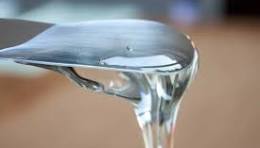
Glucose syrup, a thick aqueous solution derived from the enzymatic or catalytic conversion of starch, is one of the most versatile industrial derivatives of cassava. Cassava starch, the primary raw material, undergoes a series of processes including liquefaction, saccharification, and purification to produce food-grade glucose syrup. While starch can also be sourced from maize, potatoes, wheat, and rice, cassava represents a highly cost-effective and locally available alternative, particularly in regions like Nigeria.
Globally, the glucose syrup market has experienced substantial growth, driven by its extensive applications in the food, beverage, confectionery, and pharmaceutical industries. The market is currently valued at over USD 40 billion and is projected to grow at an average annual rate of 4–5% over the next decade. Key trends include a rising demand for processed and convenience foods, an increasing preference for natural sweeteners, and the growing adoption of glucose syrup in high-fructose formulations and functional foods. Additionally, gluten-free and plant-based dietary trends are driving interest in cassava-derived glucose syrup, as it is naturally gluten-free, highly digestible, and suitable for a wide range of applications.
In Nigeria, glucose syrup plays a critical role as a sweetener, binder, and stabilizer across multiple sectors. Current domestic production is insufficient to meet local demand, necessitating significant importation. Annual sugar consumption in Nigeria is estimated at 3.5 million tonnes, yet only 2.4 million tonnes are produced locally. Furthermore, there is an annual demand of approximately 170,000 tonnes for high-fructose syrup and 60,000 tonnes for glucose syrup, highlighting a substantial market gap for local producers.
Establishing a mechanized cassava farm and glucose syrup production plant in Nigeria would address this gap, providing a domestic source of high-quality glucose syrup while creating value-added employment opportunities. The proposed project envisions the cultivation of cassava on 700 hectares of land, with 600 hectares dedicated to farming and 100 hectares reserved for processing facilities and supporting infrastructure. Improved cassava varieties such as TME 419 would be planted, with an expected yield of 20 tonnes per hectare.
The production facility would comprise a cassava starch plant, glucose syrup production line, generators, transformers, weighbridges, storage tanks, forklifts, and associated logistics equipment. Additional farm machinery, including tractors, sprayers, harvesting equipment, and planting machines, will support efficient cultivation and harvesting operations.
The proposed plant is designed to produce 10 tonnes of liquid glucose syrup (food-grade, DE 85) per day, operating three 8-hour shifts at 80% of installed capacity throughout the first five years of operations. An input-output ratio of 4:1 is assumed for cassava tubers to starch, and 1:1 for starch to glucose syrup. The finished product will be packaged in 300-kilogram plastic drums for distribution to industrial clients, including food, beverage, confectionery, and pharmaceutical manufacturers.
Given the abundance of cassava, growing domestic and international demand, and global trends favoring plant-based and gluten-free ingredients, investing in glucose syrup production in Nigeria presents a highly viable business opportunity. This project has the potential to reduce import dependency, generate foreign exchange savings, and position Nigeria as a leading regional supplier of cassava-derived industrial sweeteners.
Custom Research Request
Still haven't found what you're looking for?
Speak to our Custom Research Team.
Table of Contents
EXECUTIVE SUMMARY 1.0 Business Overview 1.1 Description of the Business 1.2 Vision and Mission Statement 1.3 Value Proposition 1.4 Critical Success Factor of the Business 1.5 Current Status of Business 1.6 Description of the Business Industry 1.7 Contribution to Local and National Economy 2. Marketing Plan 2.1 Description of product 2.2 Product Packaging and delivery 2.3 The Opportunity 2.4 Pricing Strategy 2.5 Target Market 2.6 Distribution and Delivery Strategy 2.7 Promotional Strategy 2.8 Competition 3. Production Plan 3.1 Description of the Location 3.2 Raw Materials 3.3 Production Equipment 3.4 Production Process 3.5 Production Cost 3.6 Stock Control Process 3.7 Pre-Operating activities and expenses 3.7.1 Operating Activities and Expenses 3.8 Project Implementation Schedule 4.0 Organizational and Management Plan 4.1 Ownership of the business 4.2 Profile of the promoters 4.3 Key Management Staff 4.3.2 Management Support Units 4.4 Details of salary schedule 5. Financial Plan 5.1 Financial Assumption 5.2 Start - Up Capital Estimation 5.3 Source of Capital 5.4 Security of Loan 5.5 Loan Repayment Plan 6.0 Business Risk and mitigation factor 6.1 Business Risks 6.2 SWOT Analysis
Project Specification:
Additional Info
Get this Report
Direct bank transfer
To order the report, Please do pay the sum of ₦350,000 into
Account Name : Foraminifera Market Research Ltd
Account Number : 274 20 569 37
Account Name : Foraminifera Market Research Ltd
Account Number : 101 76 603 95
Account Name : Foraminifera Ventures
Account Number : 011 66 066 32
Make your payment directly into our bank account. Please use your Order ID as the payment reference. Your order will not be shipped until the funds have cleared in our account.
Instructions
After payment call us on 01 -29 52 413 / 08033782777 or email us at foraminiferamarketresearch@yahoo.com with the payment details. After payment confirmation, the soft copy of the report would be sent to you within 24 hours.