
Mechanized Cassava Cultivation and Ethanol Production in Nigeria; The Feasibility Report.
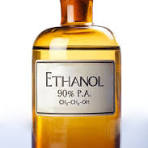
Ethanol, also known as ethyl alcohol, is a versatile chemical compound widely used across multiple industries. Chemically represented as C₂H₅OH, ethanol can be classified based on its primary applications: fuel ethanol, industrial ethanol, and beverage-grade ethanol. The most common type is ethanol used in alcoholic beverages, but it is also extensively employed as a renewable fuel source, a solvent in cosmetics and pharmaceuticals, and a feedstock for chemical production.
Ethanol is generally produced through the fermentation of sugars, cellulose, or converted starch, making cassava—a highly fermentable root crop—the ideal raw material. Cassava is abundant in Nigeria, the world’s largest producer, with an annual output of approximately 49 million tonnes. Its high starch content and ease of cultivation on marginal soils make cassava a prime source for ethanol production. Ethanol derived from cassava is noted for its high purity, odor-free quality, and environmentally friendly production process.Ethanol is classified into two primary types:
-
Denatured Ethanol
-
This ethanol is rendered unsuitable for human consumption by the addition of 2–5% low-cost hydrocarbons.
-
Primary Use: Blending with Premium Motor Spirit (PMS) to produce ethanol-gasoline blends such as E10 or E20, reducing dependence on fossil fuels and lowering vehicular carbon emissions.
-
-
Hydrous (Industrial) Ethanol
-
This is the natural form of ethanol used as a raw material in various industries.
-
Primary Uses:
-
Production of alcoholic beverages
-
Perfumes, cosmetics, and personal care products
-
Industrial solvents and chemical feedstock
-
Blending with fuels for green energy initiatives
-
Medicaments and pharmaceutical formulations
-
-
Ethanol plants also generate valuable by-products:
-
Fusel alcohols: Mixtures of higher alcohols, primarily amyl alcohol, useful in the manufacture of aromatic waters for perfumery, flavoring, and specialty chemical applications.
-
Carbon dioxide (CO₂): Produced during fermentation, CO₂ is a critical input in food and beverage industries as a propellant and carbonation agent, as well as in chemical and oil industries.
The global ethanol market has grown substantially in recent years, driven by rising demand for renewable fuels, industrial solvents, and beverage production. As of 2025, the global ethanol market is estimated at over USD 120 billion, with fuel ethanol accounting for approximately 60% of consumption. Key trends include:
-
Increasing adoption of ethanol-blended fuels in response to environmental regulations
-
Growing demand in the pharmaceutical and personal care sectors
-
Expansion of industrial ethanol applications in chemical synthesis
-
Technological advancements improving fermentation efficiency and yield
Nigeria presents a significant opportunity for ethanol production, both for fuel and industrial applications. Current domestic ethanol demand is estimated at 260 million litres per annum, while local production is limited to approximately 9–10 million litres, leaving a substantial supply gap met largely through imports.
Factors driving domestic demand include:
-
A population of over 215 million people (2025 estimates) with a growth rate of 3% per annum
-
Government policies promoting biofuels and renewable energy integration, including blending ethanol into gasoline
-
Expanding industrial sectors requiring ethanol for pharmaceuticals, cosmetics, and beverages
-
Rising awareness and adoption of renewable fuels to reduce reliance on crude oil and lower carbon emissions
Proposed Ethanol Production Plant in Nigeria
-
Location and Farm Size: 700 hectares of land in Edo State, with 600 hectares dedicated to cassava cultivation and 100 hectares for the processing facility.
-
Cassava Variety: Improved TME 419 stems, yielding 20 tonnes per hectare.
-
Production Capacity: 2,500 litres per 8-hour shift; double shifts totaling 16 operational hours per day, operating at 80% of installed capacity for 300 days annually.
-
Sections of the Plant: Milling, liquefaction and saccharification, fermentation, distillation, and CO₂ recovery. Additional infrastructure includes a generator, weighbridge, project vehicles, and support equipment.
-
Raw Material Requirement: 40 tonnes of fresh cassava tubers per day, 11.4 kg active dry yeast, 7.6 kg α-amylase, 15.4 kg glucoamylase, 34.5 kg sulfuric acid, 0.056 kg penicillin, 1.32 kg urea, and 11.4 kg NaOH.
-
Expected Output: At 80% capacity and double shifts, the plant will produce:
-
4,000 litres of ethanol (95.5%)
-
280 litres of industrial alcohol
-
12 litres of fusel oil
-
2,560 kg of CO₂
-
Ethanol production from cassava in Nigeria offers a compelling investment opportunity. With abundant cassava resources, high domestic demand, and supportive policies for renewable fuels, a mechanized ethanol plant can meet both industrial and fuel needs, reduce import dependency, and create significant economic value. The project is aligned with global trends toward sustainable biofuels and environmentally friendly industrial solutions, making it a viable and strategic venture in Nigeria’s agro-industrial landscape.
Custom Research Request
Still haven't found what you're looking for?
Speak to our Custom Research Team.
Table of Contents
EXECUTIVE SUMMARY 1.0 Business Overview 1.1 Description of the Business 1.2 Vision and Mission Statement 1.3 Value Proposition 1.4 Critical Success Factor of the Business 1.5 Current Status of Business 1.6 Description of the Business Industry 1.7 Contribution to Local and National Economy 2.0 Agricultural Practice 2.1.0 Collection of stems 2.1.1 Planting 2.1.2 Manures and Fertilizers 2.1.3 Weeding 2.1.4 Climate / Irrigation 2.1.5 Harvesting and Yield 2.1.5.1 Herbicides 2.2 Factors of Production/ Cultivation 2.2.1 Soil Type 2.2.2 Diseases and Pests 3. Marketing Plan 3.1 Description of product 3.2 Product Packaging and delivery 3.3 The Opportunity 3.4 Pricing Strategy 3.5 Target Market 3.6 Distribution and Delivery Strategy 3.7 Promotional Strategy 3.8 Competition 4. Production Plan 4.1 Description of the Location 4.2 Raw Materials 4.3 Production Equipment 4.4 Production Process 4.5 Production Cost 4.6 Stock Control Process 4.7 Pre-Operating activities and expenses 4.7.1 Operating Activities and Expenses 4.8 Project Implementation Schedule 5.0 Organizational and Management Plan 5.1 Ownership of the business 5.2 Profile of the promoters 5.3 Key Management Staff 5.3.2 Management Support Units 5.4 Details of salary schedule 6. Financial Plan 6.1 Financial Assumption 6.2 Start - Up Capital Estimation 6.3 Source of Capital 6.4 Security of Loan 6.5 Loan Repayment Plan 6.6 Profit and Loss Analysis 6.7 Cash Flow Statement 6.8 Viability Analysis 7.0 Business Risk and mitigation factor 7.1 Business Risks 7.2 SWOT Analysis
Project Specification:
Additional Info
Get this Report
Direct bank transfer
To order the report, Please do pay the sum of ₦850,000 into
Account Name : Foraminifera Market Research Ltd
Account Number : 274 20 569 37
Account Name : Foraminifera Market Research Ltd
Account Number : 101 76 603 95
Account Name : Foraminifera Ventures
Account Number : 011 66 066 32
Make your payment directly into our bank account. Please use your Order ID as the payment reference. Your order will not be shipped until the funds have cleared in our account.
Instructions
After payment call us on 01 -29 52 413 / 08033782777 or email us at foraminiferamarketresearch@yahoo.com with the payment details. After payment confirmation, the soft copy of the report would be sent to you within 24 hours.