
Mechanized Cassava Cultivation, Starch and Garri Production in Nigeria, The Feasibility Report.
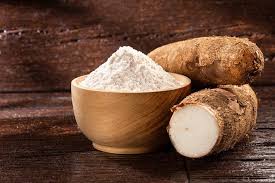
Cassava (Manihot esculenta) is the most important root crop in Nigeria and forms the backbone of both rural and urban food systems. Beyond being a staple food for millions of Nigerians, cassava is a major source of income for smallholder farmers and processors in rural areas. It contributes significantly to the nation’s agricultural output, accounting for approximately 45% of agricultural GDP for food and domestic purposes. Despite its importance, the industrial processing and utilization of cassava remain largely underdeveloped, presenting a significant opportunity for investment and value addition.
Nigeria is the world’s largest producer of cassava, with an annual output of about 40 million tonnes of tubers. Recognizing the potential of cassava as a tool for reducing import dependency and conserving scarce foreign exchange, the federal government has actively encouraged the use of cassava as an alternative raw material for industrial products, particularly as a substitute for corn starch.
Cassava starch is a fine, whitish powder extracted from cassava tubers. Its versatility has made it highly sought after in various industries. In the food sector, it serves as a thickener, stabilizer, and binding agent in soups, sauces, and confectioneries. In pharmaceuticals, it is used to produce syrups and as a binding agent in tablets. In the textile industry, cassava starch is employed as a sizing and finishing agent, enhancing the quality and durability of fabrics. Cassava starch is also used in the pulp and paper industry as a surface sizing agent and in certain adhesive formulations.
Historically, cassava starch was primarily used as a food staple by some Nigerian communities and occasionally for domestic laundry purposes. Over time, its industrial relevance has grown considerably, creating a wider market for value-added cassava products and opening new revenue streams for investors and processors.
Garri is another high-demand product derived from cassava tubers. It is a granular, slightly fermented flour consumed as a staple across Nigeria. Garri transcends socio-economic, ethnic, and religious boundaries, making it one of the most widely consumed food products in the country. Over 50% of households in Nigeria consume garri daily in one form or another, highlighting its market stability and consistent demand.
The demand for cassava products—starch and garri—is driven by both domestic consumption and industrial needs. Government policies promoting the use of cassava in place of imported corn starch, coupled with Nigeria’s growing population and urbanization trends, have created a robust and expanding market. Industrial applications in food processing, textiles, pharmaceuticals, and adhesives further strengthen the demand for cassava starch. Similarly, garri maintains a stable and high demand in the local food market due to its widespread cultural and dietary relevance.
This report examines the financial viability of establishing a mechanized cassava farm and integrated production facility for cassava starch and garri in Nigeria.
-
Farm Size and Location: The proposed farm will occupy 1,700 hectares in Edo State. Out of this, 1,530 hectares will be used for cassava cultivation, while the remaining 170 hectares will accommodate the production plant, processing equipment, storage, and civil works.
-
Crop Variety and Yield: Improved cassava stems (TME 419) will be used, with an expected yield of 20 tonnes per hectare.
-
Production Facility and Equipment: The proposed plant will include a cassava starch plant, garri processing plant, generator, wagon balance (weight bridge), transformer and electrical poles, weighing machines, wood pallets, AGO storage tank, and forklift. Additional equipment includes five delivery trucks, eight John Deere tractors, motorized knapsack sprayers, cassava harvesting and planting machines, disc harrows, and stump removals.
-
Production Capacity: The plant is designed to produce 20 tonnes per day of cassava starch and 10 tonnes per day of garri, operating at 80% of installed capacity for 300 days per year. The facility will run for 10 hours per day, with an assumed input-output ratio of 4:1 for both starch and garri production.
Establishing a mechanized cassava farm and integrated production plant for starch and garri represents a significant opportunity to harness Nigeria’s abundant cassava resources for industrial and domestic markets. With strong domestic consumption, government support for value addition, and the potential to export value-added products, the venture offers a promising avenue for revenue generation, job creation, and contribution to national economic development.
Custom Research Request
Still haven't found what you're looking for?
Speak to our Custom Research Team.
Table of Contents
EXECUTIVE SUMMARY 1.0 Business Overview 1.1 Description of the Business 1.2 Vision and Mission Statement 1.3 Value Proposition 1.4 Critical Success Factor of the Business 1.5 Current Status of Business 1.6 Description of the Business Industry 1.7 Contribution to Local and National Economy 2.0 Agricultural Practice 2.1.0 Collection of stems 2.1.1 Planting 2.1.2 Manures and Fertilizers 2.1.3 Weeding 2.1.4 Climate / Irrigation 2.1.5 Harvesting and Yield 2.1.5.1 Herbicides 2.2 Factors of Production/ Cultivation 2.2.1 Soil Type 2.2.2 Diseases and Pests 3. Marketing Plan 3.1 Description of product 3.2 Product Packaging and delivery 3.3 The Opportunity 3.4 Pricing Strategy 3.5 Target Market 3.6 Distribution and Delivery Strategy 3.7 Promotional Strategy 3.8 Competition 4. Production Plan 4.1 Description of the Location 4.2 Raw Materials 4.3 Production Equipment 4.4 Production Process 4.5 Production Cost 4.6 Stock Control Process 4.7 Pre-Operating activities and expenses 4.7.1 Operating Activities and Expenses 4.8 Project Implementation Schedule 5.0 Organizational and Management Plan 5.1 Ownership of the business 5.2 Profile of the promoters 5.3 Key Management Staff 5.3.2 Management Support Units 5.4 Details of salary schedule 6. Financial Plan 6.1 Financial Assumption 6.2 Start - Up Capital Estimation 6.3 Source of Capital 6.4 Security of Loan 6.5 Loan Repayment Plan 6.6 Profit and Loss Analysis 6.7 Cash Flow Statement 6.8 Viability Analysis 7.0 Business Risk and mitigation factor 7.1 Business Risks 7.2 SWOT Analysis
Project Specification:
Additional Info
Get this Report
Direct bank transfer
To order the report, Please do pay the sum of ₦500,000 into
Account Name : Foraminifera Market Research Ltd
Account Number : 274 20 569 37
Account Name : Foraminifera Market Research Ltd
Account Number : 101 76 603 95
Account Name : Foraminifera Ventures
Account Number : 011 66 066 32
Make your payment directly into our bank account. Please use your Order ID as the payment reference. Your order will not be shipped until the funds have cleared in our account.
Instructions
After payment call us on 01 -29 52 413 / 08033782777 or email us at foraminiferamarketresearch@yahoo.com with the payment details. After payment confirmation, the soft copy of the report would be sent to you within 24 hours.