
Odourless Fufu Flour Production From Cassava Tubers In Nigeria; The Feasibility Report.
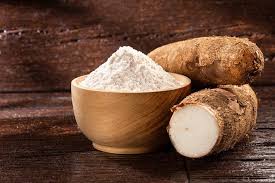
Cassava is the most important root crop in Nigeria. Beyond serving as a staple food for both rural and urban households, it is also a major source of income for farmers and processors, particularly in rural communities.
Cassava contributes significantly to Nigeria’s agricultural sector, accounting for about 45% of agricultural GDP in terms of food and domestic utilization. Despite its importance, the level of industrial processing and value addition remains relatively low, presenting strong opportunities for investment.
Nigeria currently produces approximately 40 million tonnes of cassava tubers annually. One of the key products derived from cassava is fufu flour.
Fufu flour is produced from fermented cassava and is widely consumed across Nigeria, particularly in the southern regions. It is rich in carbohydrates and is known for its smooth texture. Traditionally, fufu is prepared in wet paste form with a moisture content of about 40–50% and a characteristic odor, which makes it highly perishable and limits its shelf life. This contrasts with products like garri and lafun, which are dried, granular forms with moisture content below 10% and significantly longer shelf stability.
To address the issue of perishability, improved processing techniques have been developed to produce dry fufu flour with extended shelf life. The improved process begins with peeling, washing, and cutting cassava roots into pieces, followed by soaking in water for 3–4 days to allow fermentation. The fermented mash is then sieved to remove fiber, and the starch is extracted and dewatered to produce fufu.
The primary raw material required for fufu flour production is fresh cassava tubers. These tubers must be free from microbial contamination, insect damage, bruises, or cuts. To maintain quality, cassava should ideally be processed within two days of harvest to prevent deterioration.
The production process for fufu flour typically involves the following steps:
-
Sorting: Selection of healthy and wholesome cassava roots.
-
Weighing: Measurement of sorted roots for processing.
-
Peeling: Removal of the outer skin.
-
Washing: Thorough cleaning of peeled roots.
-
Soaking (Fermentation): Immersion in clean water for several days.
-
Pulping and Sifting: Softened roots are pulped and sieved to remove fiber.
-
Sedimentation: The slurry is allowed to settle under gravity.
-
Dewatering: Removal of excess water to reduce moisture content.
-
Granulating: The dewatered cake is broken into smaller particles.
-
Drying: Reduction of moisture content to about 10% to form grits.
-
Sieving: Separation of particles by size.
-
Milling: Coarse particles are milled to achieve desired fineness.
-
Blending: Uniform mixing of milled and fine particles.
-
Packaging: Final product is packaged for storage and distribution.
There is a strong and consistent demand for fufu across Nigeria. It is widely consumed as a staple food, cutting across ethnic, religious, and social boundaries.
The annual national demand for fufu is estimated at about 350,000 tonnes, while current supply stands at approximately 300,000 tonnes, indicating a significant supply gap. In recent years, the production of fufu has declined relative to other cassava derivatives such as cassava starch, garri, and cassava flour, which has further widened the demand-supply gap and created opportunities for new entrants into the market.
This supply gap is expected to continue expanding due to Nigeria’s growing population—estimated at over 165 million with an annual growth rate of about 3.5%. Additionally, increasing rural-to-urban migration is driving demand for convenient, shelf-stable food products such as fufu flour, further strengthening the market potential.
Custom Research Request
Still haven't found what you're looking for?
Speak to our Custom Research Team.
Table of Contents
EXECUTIVE SUMMARY 1.0 Business Overview 1.1 Description of the Business 1.2 Vision and Mission Statement 1.3 Business Objective 1.4 Critical Success Factor of the Business 1.5 Current Status of Business 1.6 Description of the Business Industry 1.7 Contribution to Local and National Economy 2. Marketing Plan 2.1 Description of product 2.2 Product Packaging and delivery 2.3 The Opportunity 2.4 Pricing Strategy 2.5 Target Market 2.6 Distribution and Delivery Strategy 2.7 Promotional Strategy 2.8 Competition 3. Production Plan 3.1 Description of the Location 3.2 Raw Materials 3.3 Production Equipment 3.4 Production Process 3.5 Production Cost 3.6 Stock Control Process 3.7 Pre-Operating activities and expenses 3.7.1 Operating Activities and Expenses 3.8 Project Implementation Schedule 4.0 Organizational and Management Plan 4.1 Ownership of the business 4.2 Profile of the promoters 4.3 Key Management Staff 4.3.2 Management Support Units 4.4 Details of salary schedule 5. Financial Plan 5.1 Financial Assumption 5.2 Start up Capital Estimation 5.3 Source of Capital 5.4 Security of Loan 5.5 Loan Repayment Plan 5.6 Profit and Loss Account 5.7 Cash Flow Analysis 5.7 Viability Analysis 6.0 Business Risk and mitigation factor 6.1 Business Risks 6.2 SWOT Analysis
Project Specification:
Additional Info
Get this Report
Direct bank transfer
To order the report, Please do pay the sum of ₦100,000 into
Account Name : Foraminifera Market Research Ltd
Account Number : 274 20 569 37
Account Name : Foraminifera Market Research Ltd
Account Number : 101 76 603 95
Account Name : Foraminifera Ventures
Account Number : 011 66 066 32
Make your payment directly into our bank account. Please use your Order ID as the payment reference. Your order will not be shipped until the funds have cleared in our account.
Instructions
After payment call us on 01 -29 52 413 / 08033782777 or email us at foraminiferamarketresearch@yahoo.com with the payment details. After payment confirmation, the soft copy of the report would be sent to you within 24 hours.