
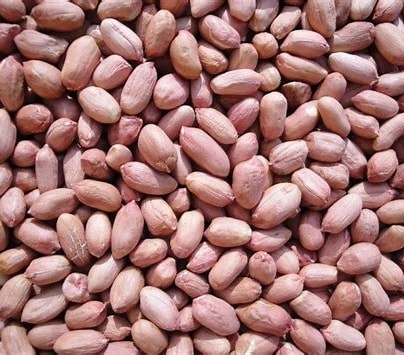
Groundnut (Arachis hypogaea), also known as peanut, is deeply woven into Nigeria’s agricultural history. In the 1950s and 1960s, the groundnut pyramids of Kano were a national icon, symbolizing the country’s status as the world’s leading exporter of this valuable commodity. While that era faded, the potential of groundnuts as a cash crop never diminished. Today, Nigeria remains one of Africa’s largest producers, yet the country’s share of the lucrative global market is a fraction of what it once was .
This is not a story of decline, but of a massive, untapped opportunity. The global demand for groundnuts and groundnut-based products is booming, driven by their use in food, confectionery, and the burgeoning plant-based protein sector. For the visionary investor, the groundnut sector offers a chance to rebuild a historic industry using modern methods, capturing value from farm to export.
This comprehensive guide will walk you through everything you need to know to build a successful groundnut export business in Nigeria. It will cover the product, its types, key producing states, global demand, market size, growth trends, regulatory requirements, challenges, and the bright prospects that lie ahead. It will also introduce you to Foraminifera Market Research Limited, a leading market research company since 2010, and showcase our extensive library of groundnut sector feasibility reports that provide the foundational data you need to build a bankable business plan.
📞 Call & WhatsApp: 08033782777
📧 Email: foraminiferaltd@gmail.com
Product Description: The Versatile Groundnut
The groundnut is a leguminous crop grown for its edible seeds. Its incredible versatility makes it a cornerstone of multiple industries and a valuable export commodity. The key export products from the groundnut value chain include:
-
Raw Groundnut Kernels (Shelled): The most basic export product. High-quality, uniformly sized, and well-cleaned kernels are in demand for direct consumption and as a raw material for processors.
-
Groundnut Oil: Nigeria produces a significant amount of groundnut oil, but much of it is for domestic consumption. High-quality, refined groundnut oil is an exportable product with a strong market in West Africa, Europe, and North America, prized for its light color, mild flavor, and high smoke point [citation:reports].
-
Groundnut Cake/Meal: A by-product of oil extraction, groundnut cake is a high-protein (45-50%) animal feed ingredient, essential for the poultry and livestock industries. It is a valuable export commodity in its own right [citation:reports].
-
Groundnut Paste (Peanut Butter): A popular consumer product with a growing global market, particularly for natural and organic varieties [citation:reports].
-
Kulikuli: A traditional Nigerian snack made from groundnut cake, also known as “kuli-kuli” or “kuli-kuli” [citation:reports].
Types of Groundnut Varieties
Groundnut varieties are generally categorized by their growth habit, seed size, and oil content.
| Groundnut Type | Characteristics | Market Suitability |
|---|---|---|
| Virginia (Runner) | Large-kernel, often used for roasting and in-shell consumption. High in protein. | Premium export market for edible nuts (snack and confectionery). |
| Spanish | Small-kernel, high oil content. | Preferred for oil extraction. Also used for peanut butter and snacks. |
| Valencia | Sweet, small kernels; often with three or more seeds per pod. | Used for boiling, roasting, and natural peanut butter. |
| Red Skin Varieties | High in antioxidants; sought after for natural products. | Niche health food market. |
Leading Groundnut Producing States in Nigeria
Groundnut production in Nigeria is heavily concentrated in the northern states, the historic heartland of the industry.
| State | Zone | Notes on Production |
|---|---|---|
| Kano | North West | The historic groundnut capital of Nigeria. Remains a major producer and the primary commercial hub for groundnut trade and processing. |
| Kaduna | North West | A key producer with large tracts of arable land . |
| Katsina | North West | A major groundnut-producing state . |
| Jigawa | North West | A significant producer with fertile agricultural lands . |
| Zamfara | North West | A key producer in the North-West . |
| Sokoto | North West | A notable producer, with irrigation potential from the Sokoto-Rima Basin . |
| Kebbi | North West | A significant producer . |
| Bauchi | North East | A major producer in the North-East . |
| Gombe | North East | A key producer . |
| Taraba | North East | An emerging producer with significant agricultural potential. |
| Adamawa | North East | A significant producer . |
| Benue | North Central | A key producer in the “Middle Belt.” |
| Niger | North Central | A notable producer . |
| Nasarawa | North Central | A significant producer . |
| Plateau | North Central | A key producer . |
| Kwara | North Central | A notable producer . |
| Oyo | South West | The leading producer in the South-West . |
| Osun | South West | A significant producer in the South-West . |
| Ogun | South West | A notable producer . |
| Ekiti | South West | A key producer . |
Demand and Market Size: The Global Appetite
The global market for groundnuts and its derivatives is substantial and growing.
Global Market
-
Market Size: The global groundnut market was valued at approximately USD 47.8 billion in 2024 and is projected to grow at a compound annual growth rate (CAGR) of 4.8% to reach USD 76.8 billion by 2034 .
-
Key Drivers:
-
Rising Demand for Plant-Based Protein: Groundnuts are a rich source of protein, and their use in meat alternatives and snacks is expanding.
-
Growth of the Confectionery Industry: Groundnuts are a key ingredient in chocolates, candies, and other sweets.
-
Increasing Consumption of Peanut Butter: The global peanut butter market is booming, particularly in developed countries.
-
Expanding Animal Feed Sector: The demand for high-protein groundnut cake/meal for livestock feed is growing, especially in Asia and the Middle East.
-
-
Key Importers: The largest importers of groundnuts include China (the world’s largest), the European Union (particularly the Netherlands and the UK), Indonesia, Vietnam, and Mexico. For groundnut oil, the United States, Canada, and the European Union are major markets.
Nigeria’s Position
-
Production: Nigeria produces an estimated 3.0 to 4.0 million metric tonnes of groundnuts annually, making it the largest producer in Africa and among the top 5-6 globally .
-
Export Potential: Despite this massive production, Nigeria’s formal groundnut exports are a fraction of what they could be. The country has the potential to capture a much larger share of the global market by focusing on quality, value addition, and meeting international standards.
-
Domestic Demand: There is also a huge domestic market for groundnuts, groundnut oil, and groundnut cake from the local food processing and animal feed industries [citation:reports]. Supplying to these local industries is a profitable opportunity in its own right [citation:reports].
The Foraminifera Advantage: Your Complete Library of Groundnut Value Chain Intelligence
Successfully navigating the groundnut export sector requires a deep, data-driven understanding of every link in the value chain. Foraminifera Market Research Limited offers the most comprehensive library of groundnut-related feasibility reports available anywhere.
| Report Title | Description and Link | Key Insights for Your Investment |
|---|---|---|
| Groundnut (Peanut) Export in Nigeria | Click Here | The core, foundational report for your venture. Provides a detailed analysis of the technical, market, and financial feasibility of establishing a groundnut export business. Covers sourcing, cleaning, grading, packaging, international market requirements, and financial projections. |
| Refined Groundnut Oil and Meal Production in Nigeria | Click Here | Essential for value addition. Analyzes the opportunity in producing high-quality, exportable refined groundnut oil and the valuable by-product, groundnut meal (cake). |
| Groundnut Oil and Cake Production in Nigeria | Click Here | A detailed feasibility study on setting up a groundnut oil extraction plant, covering both the oil and cake products. |
| How to Make Huge Profit Supplying Groundnut to Local Industries in Nigeria | Click Here | Critical for aggregators and suppliers. Provides intelligence on sourcing groundnuts from farmers and supplying them to local industrial processors (oil mills, food companies). |
| How to Make Huge Profit Supplying Groundnut Cake to Local Industries in Nigeria | Click Here | A focused report on the opportunity to supply groundnut cake (meal) to the animal feed industry, a high-demand by-product. |
| Groundnut Paste (Peanut Butter) Production in Nigeria | Click Here | Explores the opportunity in producing groundnut paste (peanut butter), a popular consumer product with export potential. |
| Kulikuli Production in Nigeria | Click Here | Analyzes the production of kulikuli, a traditional Nigerian snack made from groundnut cake, which has potential for formalization and export. |
Growth Trends in the Groundnut Export Sector
-
Revival of the Groundnut Pyramids: There is a renewed national focus on reviving the groundnut sector, with both government and private sector initiatives aiming to boost production and exports .
-
Shift to Value Addition: The trend is moving away from exporting raw kernels towards exporting higher-value processed products like refined oil, meal, and peanut butter.
-
Focus on Quality and Standards: To access premium markets, there is a growing emphasis on producing groundnuts that meet international standards for aflatoxin levels, pesticide residues, and uniform grading.
-
Organic and Non-GMO Demand: The global demand for organic and non-GMO groundnuts is growing, offering premium price opportunities for Nigerian producers.
-
Technological Advancements: Modern cleaning, sorting, and processing equipment are becoming more accessible, enabling exporters to meet international quality standards.
Industry Regulators and Export Requirements
Exporting groundnuts from Nigeria requires compliance with a range of regulatory bodies and international standards.
-
Nigerian Export Promotion Council (NEPC): The primary government agency for export matters. You must register as an exporter with the NEPC to be eligible for export incentives .
-
Nigeria Agricultural Quarantine Service (NAQS): Issues the phytosanitary certificate required for export, certifying that your product is free from pests and diseases .
-
National Agency for Food and Drug Administration and Control (NAFDAC): For processed products like groundnut oil and peanut butter, NAFDAC registration is mandatory. For raw kernels, NAFDAC may still have requirements for export.
-
Standards Organization of Nigeria (SON): Sets quality standards for both raw and processed groundnut products.
-
National Agency for the Control of Aflatoxins (NACA): Aflatoxin contamination is a major challenge for groundnut exports. This agency is critical in ensuring compliance with international aflatoxin limits .
-
Federal Inland Revenue Service (FIRS): You must be tax-compliant to access export incentives like the Export Expansion Grant (EEG) .
-
International Buyers’ Requirements: Your international clients will have specific requirements for quality, grading, and may require certifications for aflatoxin levels, pesticide residue testing, organic certification, and non-GMO status.
Challenges Facing Groundnut Exporters
-
Aflatoxin Contamination: This is the single biggest challenge. Aflatoxin, a toxin produced by fungi, can make groundnuts unsafe for consumption and is strictly regulated in international markets.
-
Quality and Grading Inconsistency: Lack of modern cleaning, sorting, and grading equipment leads to inconsistent quality, which is rejected by premium buyers.
-
High Cost of Inputs: The cost of quality seeds, fertilizers, and agrochemicals can be a barrier.
-
Post-Harvest Losses: Inadequate drying and storage lead to quality deterioration and aflatoxin development.
-
Price Volatility: Global prices can fluctuate, affecting profitability.
-
Logistics and Transportation: High costs and poor road networks can erode margins.
-
Meeting International Standards: Achieving the stringent quality and traceability standards required by international buyers is a major hurdle.
The Prospects: Why the Future is Bright
-
Historic Legacy and National Focus: The groundnut sector is deeply embedded in Nigeria’s agricultural history, and there is strong political will to revive it .
-
Massive Global Market: The global demand for groundnuts and groundnut products is growing, offering a massive export market .
-
Nigeria’s Competitive Advantage: Nigeria is a top global producer with the potential to produce high-quality, non-GMO groundnuts, which are in demand in premium markets.
-
Value-Addition Opportunities: The entire processing value chain (oil, meal, butter, snack foods) is wide open for investment and export .
-
Government Export Incentives: The EEG can significantly boost profitability for exporters .
Foraminifera Market Research Limited: Your Partner in Groundnut Export Success
Investing in groundnut export is a complex, capital-intensive undertaking. It requires more than just capital; it requires intelligence, planning, and a data-driven approach. Foraminifera Market Research Limited has been the partner that serious agribusiness investors trust since 2010.
How We Can Help You
We can provide the critical intelligence you need to de-risk your investment and build a profitable business.
📞 Call & WhatsApp: 08033782777
📧 Email: foraminiferaltd@gmail.com
Let our team of experts provide you with the data and insights you need to build a profitable and sustainable groundnut export business.
Conclusion: Rebuild the Pyramids, Capture the Value
The groundnut sector in Nigeria offers a unique opportunity to revive a historic industry using modern, data-driven methods. By focusing on quality, value addition, and meeting international standards, Nigeria can reclaim its position as a world leader in groundnut exports.
Don’t just export raw nuts. Build a business that captures the full value of the groundnut.
For over a decade, Foraminifera Market Research Limited has been the partner that successful agribusinesses trust to provide the foundational data and expert guidance. Contact us today at 08033782777 or foraminiferaltd@gmail.com to purchase our detailed feasibility reports on groundnut export, oil and cake production, and related opportunities, or to commission a custom business plan.
Visit [foramfera.com] to learn more about how we can help you succeed.
Custom Research Request
Still haven't found what you're looking for?
Speak to our Custom Research Team.