
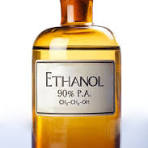
Production Of Edible Ethanol 95.5% Alcohol From Cassava Tubers In Nigeria, The Feasibility Report
Ethanol, also called ethyl alcohol; can be used as fuel alcohol, drinking alcohol, and grain alcohol. The common type of ethanol is the one found in alcoholic beverages. It is also used as fuel for cars and often called alcohol or spirit.
Ethanol is generally produced by the fermentation of sugar, cellulose, or converted starch and has a long history. In Nigeria, local production of ethanol from maize, guinea corn, millet, other starchy substrates, and cellulose is as old as the country itself.
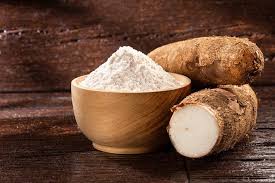
Cassava Starch Production In Nigeria, The Feasibility Report.
Cassava (Manihort Esculentus (Euphorbiacea)) is grown in all the states of the Federation with the current production level being about 45 million metric tones per annum; a figure expected to double by 2020. Nigeria is the leading cassava producer in the world, producing a third more than Brazil and almost double the production capacity of Thailand and Indonesia.
Although it is the world leader in cassava production, 90% of the annual production in Nigeria is targeted for the domestic food market.
Establishing A Liquified Petroleum Gas {Lpg} Filling Plant In Nigeria; The Feasibility Report.
Petroleum products are among the most valuable natural resources abundantly available in our country. Nigerians and people everywhere use petroleum products as a fuel in their automobiles, generating sets, industrial plants and for cooking purposes, thus making petroleum products an essential commodity that is needed for the daily operations of individual, industrial and national activities.
Establishing and Operating An Oil Palm Plantation and Processing Plant in Nigeria; The Feasibility Report.
Nigeria is now a net importer of the product. Nigeria produces only one million, three hundred thousand (1,300,000) metric tons of vegetable oil and imports over three hundred and fifty thousand (350,000) metric tons of vegetable oil annually, expending an average of the naira equivalent of USD 500 million in foreign exchange.
Cassava Chips Production in Nigeria; The Feasibility Report.
The demand for Cassava Chips as an industrial product is wide. It cuts across so many manufacturing industries such as distilleries, pharmaceutical, food and most especially the animal feed industry. The production technology is simple and the equipment’s are locally fabricated.
Kunu Drink Production and Preservation in Nigeria; The Feasibility Report.
Kunu prepared by the traditional method has short shelf-life, and therefore, requires adequate preservation to make it shelf-stable and of high keeping quality.
There are various types of kunu and they are Kunun zaki, Kunun gyada, Kunun akamu, Kunun tsamiya, Kunun baule, Kunun jiko, Amshau and Kunun gayamba. Kunun zaki was the most commonly consumed.
Mechanized Soya Bean Cultivation and Sales in Nigeria; The Feasibility Report.
Soya Bean is a leguminous crop whose importance and economic benefits cannot be over emphasized. Products that can be gotten from Soya Bean include Soy Cake, Soy oil, Full Fat Soya, Soy meal, soy meal, soy flour, soy milk, tofu, textured vegetable protein amongst other things.
Cassava Tuber Cultivation and Production of Cassava Starch in Nigeria; The Feasibility Report.
Cassava is the most important root crop in Nigeria. Apart from being a staple crop in both rural and urban household’s cassava is a major source of income to cassava farmers and processors in the rural areas.

Bread Production In Nigeria, The Feasibility Report.
Bread is a staple food prepared by baking dough of flour and water. It is popular around the world and is one of the world's oldest foods.
Processing Of Oil Palm Seed { Fresh Fruit Bunch} To Produce Palm Oil And Palm Kernel Nuts In Nigeria; The Feasibility Report.
Until the late 1970’s when hydrocarbon was discovered in commercial quantity in Oloibiri, present day Bayelsa state, Agriculture remained the mainstay of the economy contributing over 90% of the Gross Domestic Product (GDP) of the country as against the less than 40% it now contributes with crop production accounting for an estimated 85%, livestock 10% and the balance made up by fisheries and forestry.
Liquefied Petroleum Gas (LPG) Cylinder Production in Nigeria; The Feasibility Report.
Petroleum products are among the most valuable natural resources abundantly available in our country. Nigerians and people everywhere use petroleum products as a fuel in their automobiles, generating sets, industrial plants and for cooking purposes, thus making petroleum products an essential commodity that is needed for the daily operations of individual, industrial and national activities.
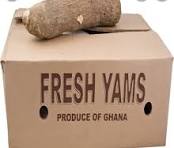
Yam Export From Nigeria; The Feasibility Report
Yam is produced in all the states of the federation though the product is produced more in Benue, Oyo and Nassarawa.
Garri, Peanut, Milk and Sugar Packaging and Sales in Nigeria; The Feasibility Report.
Gari, as commonly called in Nigeria, is a product derived from cassava and which Nigeria is the largest producer of cassava in the world with a yield of about fifty-four (54,000,000) million tonnes of cassava in 2013.
Setting Up A Liquefied Petroleum Gas ({Lpg) Skid Filling Plant In Nigeria; The Pre-Feasibility Report
Petroleum products are among the most valuable natural resources abundantly available in our country. Nigerians and people everywhere use petroleum products as a fuel in their automobiles, generating sets, industrial plants and for cooking purposes, thus making petroleum products an essential commodity that is needed for the daily operations of individual, industrial and national activities.
Mechanized Soya Bean Cultivation and Soy Flour Production; The Feasibility Report.
Soy flour, derived from ground soybeans, boosts protein, brings moisture to baked goods, and provides the basis for some soymilks and textured vegetable protein. This versatile ingredient improves taste and texture of many common foods and often reduces the fat absorbed in fried foods. The taste of soy flour varies from a “beany” flavor to a sweet and mild flavor, depending on how it is processed.
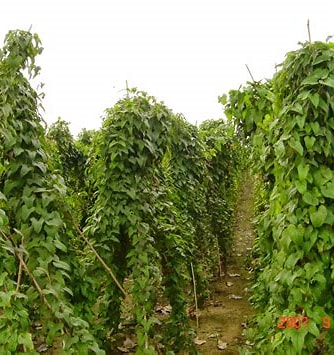
How to Establish and Run a Yam Plantation in Nigeria (100 Hectares); The Feasibility Report.
Yam is grown on free draining, sandy and fertile soil, after clearing the first fallow. Land is prepared in the form of mound or ridge or heap of 1 metre (3 ft 3 in) height. The yams recommended for such soil conditions in Nigeria are white yam or white guinea yam (Discorea rotundata) and water yam or yellow yam (Discorea alata). Planting is done by seed yam or cut setts from ware tubers.
Soy-Ogi Powder Production in Nigeria; The Feasibility Report.
“Ogi” is a fermented product made from maize. Traditionally, it is obtained in wet form and serves as breakfast cereal for both children and adults. “Ogi” prepared by the traditional method has short shelf-life, and therefore, requires adequate processing to make it shelf-stable and of high quality.
It is low in protein content due to low protein content of maize. Soy-Ogi is Ogi fortified with soybeans to improve its protein content.
Mechanized Soya Bean Cultivation and Soy – Dawadawa Production in Nigeria; The Feasibility Report.
Soy bean was introduced into Nigeria in 1908; it was first planted in Ibadan, Oyo State. Initially the crop was cultivated for export with the support and encouragement of Groundnut Board. Nigeria presently produces about 500,000 MT of Soybean annually making it the largest producer of the product on the African continent. Soybean is a legume which is produced in most the middle belt of the country with Benue state accounting for about 45% of the total production in country.
Mechanized Cassava Cultivation, Starch and Garri Production in Nigeria, The Feasibility Report.
Cassava is the most important root crop in Nigeria. Apart from being a staple crop in both rural and urban household’s cassava is a major source of income to cassava farmers and processors in the rural areas.
Cassava alone contributes about 45% of agricultural GDP in Nigeria for food or domestic purposes but its industrial processing and utilization has been very limited.
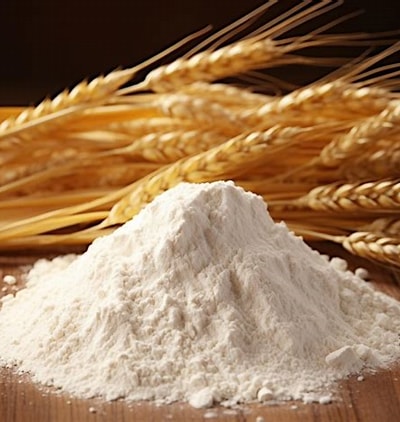
Production Of Wheat Flour In Nigeria, The Pre-Feasibility Report
Nigerian agriculture is characterized by considerable regional and crop diversity. Analysis of this sector, particularly the food sub-sector, is fraught with serious data problems. However, the available statistics provide a broad overview of development in agriculture upon which we can make some broad generalizations about its role in economic development and structural change in Nigeria.